
- Medical License No.: 144189
- 021-8805 0794
Dr. Zahra Sadat Shamekhi
General Dentist

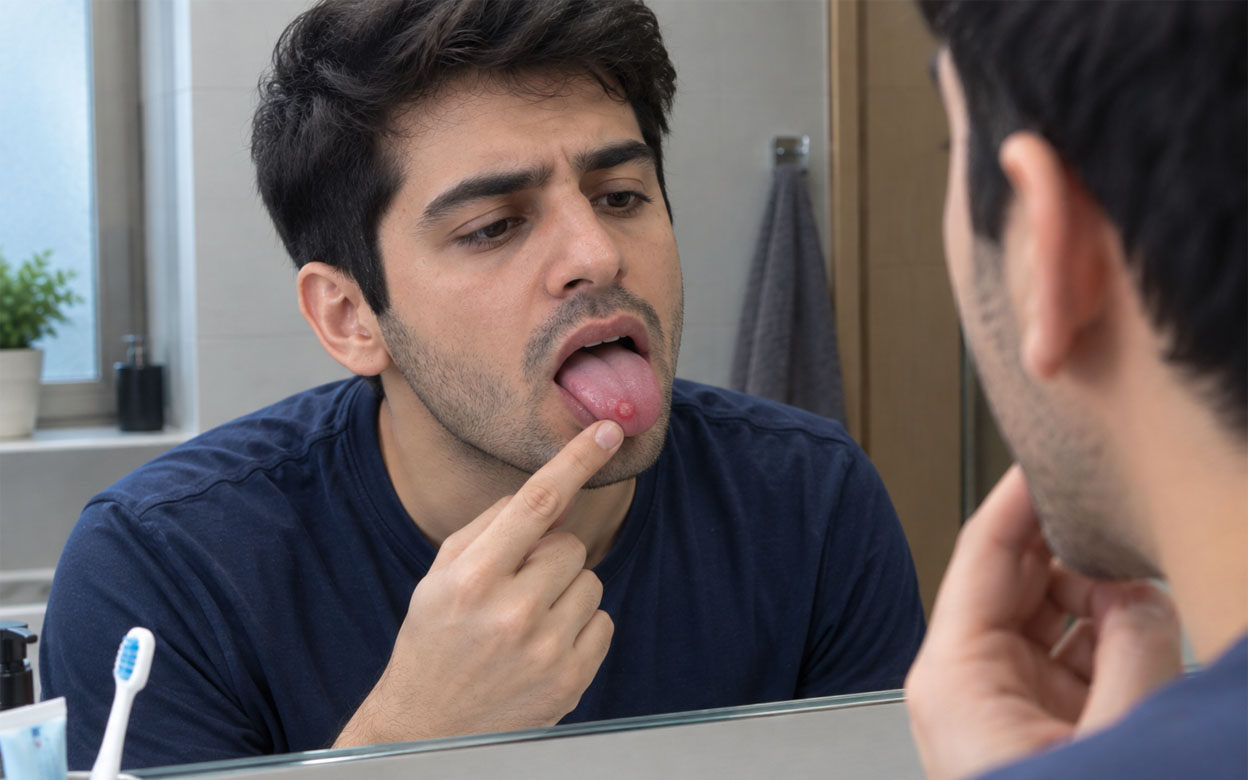
Mouth ulcers, also known as canker sores, are one of the most common oral problems. They appear as small, round or oval-shaped sores on the tongue, inside the lips or cheeks, and sometimes on the gums. Mouth ulcers are usually not contagious and, in most cases, heal on their own within a few days to two weeks without specific treatment.
But the important questions are: Why do mouth ulcers occur, and when should they be taken seriously?
The exact cause of mouth ulcers is not always clear, but several factors may increase the likelihood of developing them, including:
Stress and anxiety
Deficiencies in certain vitamins and minerals, such as iron, folate, and vitamin B12
Injuries inside the mouth, such as accidentally biting the lip or cheek
Hormonal changes
A weakened immune system
Sensitivity or reactions to certain foods
The use of certain medications
In some people, mouth ulcers may occur repeatedly without an obvious cause.
A mouth ulcer usually appears as a small sore with a white or yellow center surrounded by a red area. These sores may cause pain and burning while eating, speaking, or brushing your teeth.
Spicy, acidic, and very salty foods may also make the pain and irritation worse.
Most simple mouth ulcers heal on their own. To reduce pain and irritation, you can:
Avoid spicy and acidic foods until the ulcer heals.
Maintain good oral hygiene by using a soft-bristled toothbrush.
Drink plenty of water.
Avoid touching, picking, or irritating the ulcer.
If the pain is severe, consult a doctor or dentist about appropriate treatment options.
If mouth ulcers occur frequently, it is recommended to have the underlying cause evaluated by a doctor or dentist.
In most cases, mouth ulcers are not dangerous. However, if a mouth ulcer lasts for more than two weeks, is unusually large or painful, occurs repeatedly, or is accompanied by fever, weight loss, or other unusual symptoms, you should consult a doctor or dentist.
A sore that does not heal over a long period of time should also be examined by a healthcare professional to determine its underlying cause.
Mouth ulcers are usually temporary and harmless sores that can develop due to stress, injuries inside the mouth, nutritional deficiencies, or other factors. Most mouth ulcers heal without specific treatment. However, persistent or recurrent mouth ulcers may require professional evaluation to identify the underlying cause.