- Medical License No.: 144189
- 021-8805 0794
- 09128338140
Dr. Zahra Sadat Shamekhi
General Dentist

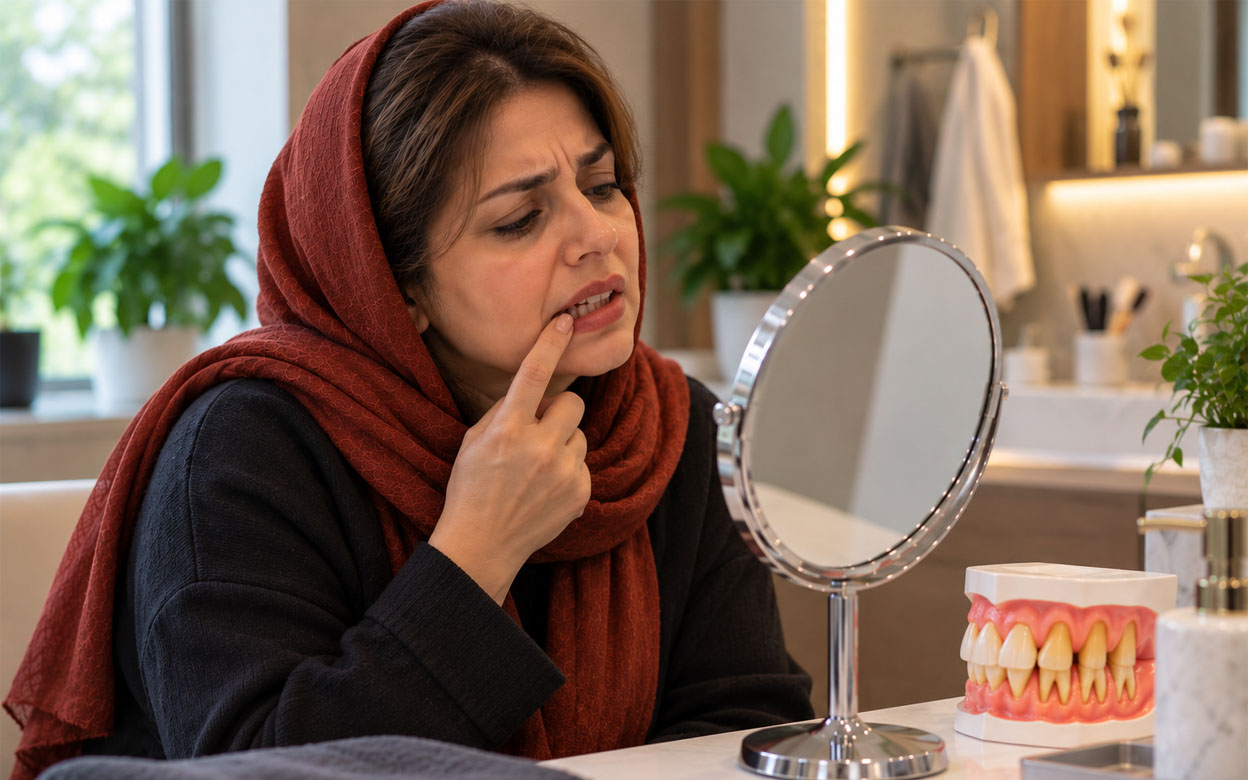
why do gums recede? Can receding gums grow back, and what are the best treatment options?
There are several possible causes of receding gums. The most common include:
Using a hard-bristled toothbrush or applying excessive pressure while brushing can damage gum tissue and contribute to gum recession over time.
Gingivitis and periodontal disease are important conditions affecting gum health. Advanced periodontal disease can damage the bone and supporting tissues around the teeth, contributing to gum recession.
Some people naturally have thinner gum tissue, which may make them more susceptible to gum recession.
Teeth positioned outside their ideal alignment within the jawbone may be more prone to gum recession, especially when the surrounding gum tissue is thin.
Tobacco use and poor oral hygiene can negatively affect gum health and increase the risk of periodontal disease.
Signs of receding gums may develop gradually and can be difficult to notice in the early stages.
Common symptoms include:
Teeth appearing longer than usual
Visible tooth roots
Tooth sensitivity to hot and cold temperatures
Changes in the gumline
Notches or indentations near the gumline
Gum bleeding or inflammation when gum disease is present
If you notice these symptoms, it is advisable to visit a dentist for an evaluation.
One of the most frequently asked questions is: Can gum recession be reversed?
Gum tissue that has genuinely receded generally does not grow back to its original position on its own.
However, depending on the severity and underlying cause, appropriate treatment may help prevent further recession. In some cases, gum graft surgery can improve coverage of exposed tooth roots.
The most appropriate gum recession treatment depends on the cause, severity, and overall condition of your oral health.
Using a soft-bristled toothbrush and proper brushing techniques can help prevent additional damage to the gums.
If gum recession is associated with periodontal disease, professional dental cleaning and procedures such as scaling and root planing may be necessary to control inflammation and infection.
In some cases, gum graft surgery is performed to increase gum tissue thickness, reduce sensitivity, or cover part of an exposed tooth root.
The degree of successful root coverage depends on the condition of the tooth and surrounding tissues.
If gum recession causes tooth sensitivity, your dentist may recommend desensitizing toothpaste or other protective treatments.
To reduce the risk of receding gums and help prevent further progression:
Use a soft-bristled toothbrush and avoid brushing too aggressively.
Brush regularly and clean between your teeth every day.
Attend routine dental examinations to monitor gum health.
Avoid smoking and other tobacco products.
Do not ignore frequent gum bleeding or changes in your gumline.
Gum recession alone does not always cause teeth to become loose. However, if it is associated with advanced periodontal disease and bone loss, tooth mobility may occur.
In some cases, improving oral hygiene and treating gum disease can help prevent further recession. However, restoring gum coverage over exposed tooth roots may require surgery.
Brushing with excessive pressure or using improper techniques can contribute to gum recession.
Gum recession may cause tooth sensitivity and expose tooth roots. When associated with periodontal disease, it may also involve damage to the tissues supporting the teeth.
Gum recession, or receding gums, can develop due to aggressive brushing, periodontal disease, naturally thin gum tissue, or tooth positioning.
Although receded gum tissue generally does not grow back naturally, early diagnosis and appropriate treatment can help control the condition, reduce sensitivity, and prevent further damage.
If you have noticed receding gums, exposed tooth roots, increased sensitivity, or changes in your gumline, you can visit Dr. Zahra Sadat Shamekhi's dental office in the Mollasadra and Vanak area of Tehran for a dental examination.
After evaluating your gums and teeth, the dentist can identify possible causes of gum recession and recommend appropriate care, treatment options, or referral to a periodontal specialist when necessary.