
- Medical License No.: 144189
- 021-8805 0794
- 09128338140
Dr. Zahra Sadat Shamekhi
General Dentist

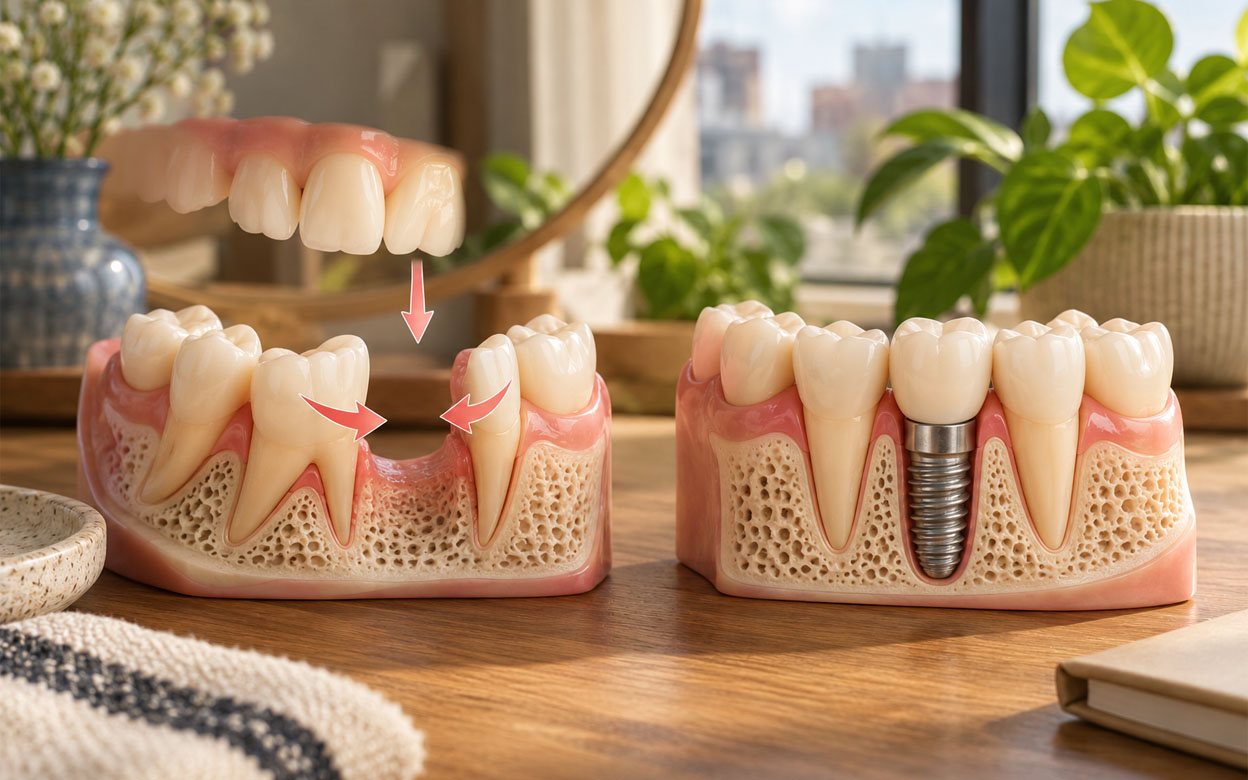
One of the most important consequences of a missing tooth is bone loss in the jaw.
The root of a natural tooth helps transfer chewing forces to the surrounding bone. After a tooth is extracted or lost, this natural stimulation decreases, and the bone in that area can gradually shrink.
Bone changes can be particularly noticeable during the first months after tooth extraction and may affect the possibility or complexity of getting a dental implant in the future.
Teeth function together as a coordinated system. When one tooth is lost, the neighboring teeth may gradually tilt or move toward the empty space.
This movement can affect tooth alignment and change the way the upper and lower teeth come together.
Therefore, even when a missing tooth is not visible when you smile, leaving the space untreated may eventually affect the surrounding teeth.
When a tooth no longer has an opposing tooth to contact during biting, the opposing tooth may gradually move toward the empty space.
This can alter the bite and may create additional dental problems in some patients.
Another possible consequence of a missing tooth is reduced chewing efficiency.
When several teeth are missing, particularly molars, a person may begin chewing mainly on one side of the mouth. This can place additional stress on the remaining teeth.
Replacing missing teeth can help restore more balanced and effective chewing.
When a front tooth is missing, the effect on the smile is immediately noticeable.
However, losing multiple teeth and experiencing changes in the surrounding bone and soft tissues may also affect facial support and appearance over time.
For this reason, replacing missing teeth is not only a cosmetic treatment; it can also have important functional benefits.
Movement of the teeth surrounding an empty space can affect how your upper and lower teeth fit together.
In some cases, these changes may also make certain areas more difficult to clean and can complicate overall oral health.
This is why the condition of the remaining teeth should be evaluated after tooth loss.
One reason not to leave a missing tooth untreated for a long period is the possibility of jawbone loss.
If significant bone loss occurs in the area, placing a dental implant later may require additional procedures, such as bone grafting.
However, this does not happen to the same extent in every patient. The available bone should be evaluated through a dental examination and appropriate imaging.
No. Dental implants are not the only option for replacing missing teeth.
Depending on the patient's condition, the number and location of missing teeth, the health of neighboring teeth, and the amount of available jawbone, treatment options may include:
Dental implants
Dental bridges
Partial or removable dentures
Other prosthetic treatments based on the patient's needs
In certain situations, a dentist may determine that replacing a particular missing tooth is not necessary.
Therefore, the best decision should always be based on an individual dental evaluation.
The best time to get a dental implant after tooth extraction is not the same for everyone.
In some cases, an implant can be placed immediately after tooth extraction. In other situations, the dentist may recommend waiting for the gum tissue and bone to heal.
Factors such as infection, available bone, tooth location, gum health, and the patient's overall condition can influence the timing of implant placement.
Over time, changes such as jawbone loss, shifting of neighboring or opposing teeth, and reduced chewing function may occur. The extent of these changes varies from person to person.
Yes. Teeth next to an empty space may gradually move or tilt toward it, although the amount of movement varies between individuals.
In many cases, dental implants can still be placed years after tooth loss. However, the condition and amount of available jawbone and gum tissue must first be evaluated. If significant bone loss has occurred, additional procedures may be required.
Both dental implants and bridges can be used to replace missing teeth. The condition of the neighboring teeth, jawbone, number of missing teeth, and individual needs all influence which option may be more appropriate.
So, what happens if you don’t get a dental implant after losing a tooth? The concern is not simply having an empty space in your smile. Tooth loss may gradually contribute to jawbone loss, shifting teeth, changes in the bite, and reduced chewing ability.
However, dental implants are not the only treatment option. The best way to replace a missing tooth should be selected according to each patient's individual dental condition.
If you have lost one or more teeth or several years have passed since your tooth was extracted, you can visit Dr. Zahra Sadat Shamekhi’s dental office in the Mollasadra and Vanak area of Tehran for an evaluation of your jawbone and available tooth replacement options.
After examining your oral and dental condition, the most appropriate option—such as a dental implant, dental bridge, or dental prosthesis—can be determined.