
- Medical License No.: 144189
- 021-8805 0794
Dr. Zahra Sadat Shamekhi
General Dentist

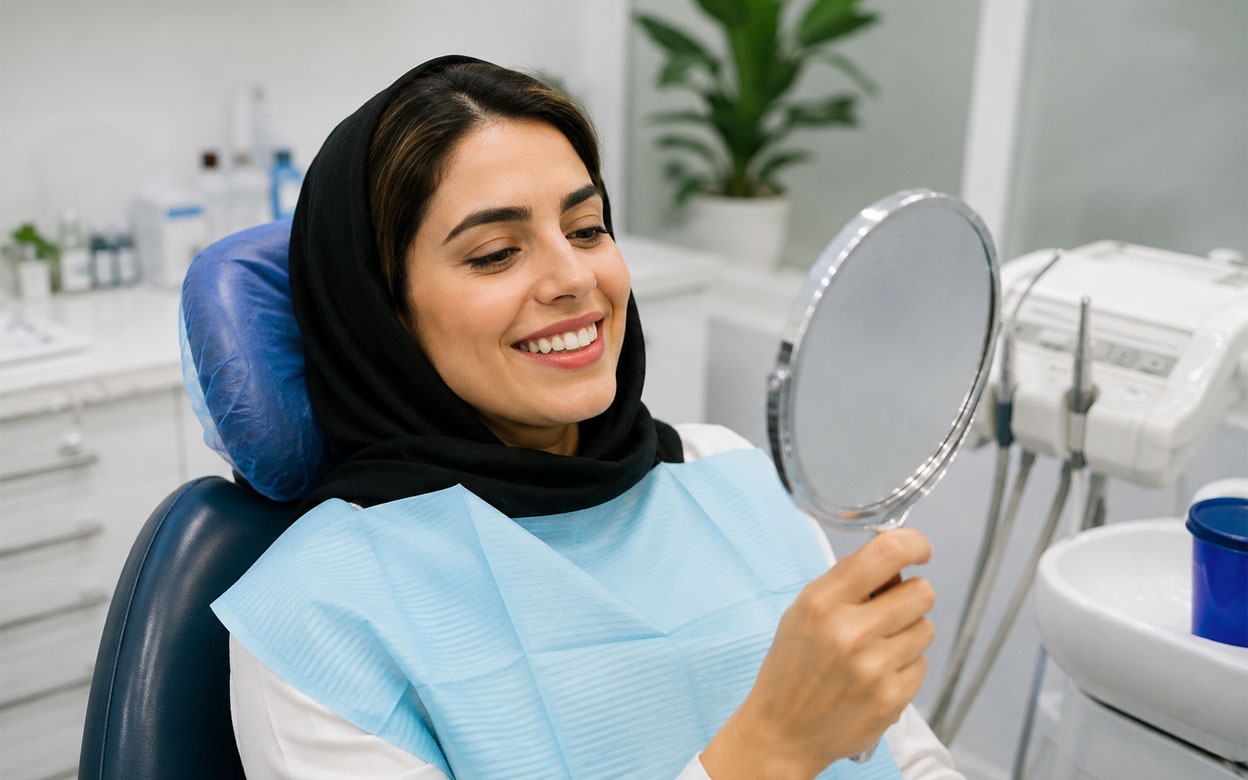
Teeth whitening, also known as dental bleaching, is a non-invasive cosmetic dental procedure that lightens the natural color of your teeth using professional whitening agents containing hydrogen peroxide or carbamide peroxide.
These whitening agents break down stains and discoloration within the enamel, making your teeth several shades brighter without damaging their natural structure.
Unlike veneers or dental bonding, teeth whitening does not require removing or reshaping the tooth. It simply enhances the natural color of your existing teeth.
You may be an ideal candidate for teeth whitening if you have:
Yellow or stained teeth caused by coffee or tea
Age-related tooth discoloration
Tobacco or smoking stains
Healthy teeth and gums
A desire for a brighter, more attractive smile
If you have untreated cavities, gum disease, or cracked teeth, these conditions should be treated before undergoing whitening.
This professional whitening treatment is performed by a dentist and usually takes 45 to 60 minutes in a single appointment.
Benefits:
Fast and noticeable results
Safe and professionally supervised
More effective than over-the-counter products
Ideal for patients seeking immediate improvement
With this method, your dentist creates custom whitening trays and provides professional whitening gel for home use.
Benefits:
Lower cost
Convenient home application
Greater control over whitening progress
Depending on your natural tooth color and the type of staining, professional whitening can brighten your teeth by approximately 2 to 8 shades.
People with stains caused by coffee, tea, or smoking often achieve the best results.
Professional teeth whitening typically lasts between 1 and 3 years, depending on your lifestyle and oral hygiene habits.
To help maintain your results:
Reduce coffee, tea, and soft drink consumption.
Avoid smoking and tobacco products.
Brush your teeth twice a day.
Floss daily.
Visit your dentist every six months for professional cleanings and check-ups.
One of the most common questions patients ask is whether whitening damages tooth enamel.
The answer is No.
When performed by a qualified dentist using professional-grade materials, teeth whitening is considered safe and does not harm the enamel. Some patients may experience temporary sensitivity to hot or cold foods, but this usually disappears within a few days.
Many people confuse professional dental cleaning with teeth whitening, but they serve different purposes.
Dental Cleaning (Scaling):
Removes plaque, tartar, and surface stains, restoring your teeth to their natural color.
Teeth Whitening (Bleaching):
Lightens the natural shade of your teeth beyond their original color for a brighter smile.
In many cases, dentists recommend having a professional cleaning before whitening to achieve the best possible results.
To maximize the longevity of your whitening results, avoid strongly colored foods and beverages for the first 48 hours, including:
Coffee
Tea
Cola and soft drinks
Saffron-containing foods
Soy sauce
Chocolate
Tobacco products
Maintaining excellent oral hygiene will also help keep your smile brighter for longer.
The cost of professional teeth whitening depends on several factors, including:
The whitening method (in-office or at-home)
The quality and brand of whitening materials
The number of treatment sessions required
The condition of your teeth
The dentist's experience and clinic facilities
A dental examination is necessary to determine the most appropriate treatment and its exact cost.
Professional teeth whitening is one of the safest, fastest, and most effective ways to achieve a brighter smile. Because the procedure does not involve drilling or removing tooth structure, it preserves the health of your teeth while significantly improving their appearance.
If you're unhappy with stained or yellow teeth and want a whiter, healthier-looking smile, professional teeth whitening may be the perfect solution.