
- Medical License No.: 144189
- 021-8805 0794
Dr. Zahra Sadat Shamekhi
General Dentist

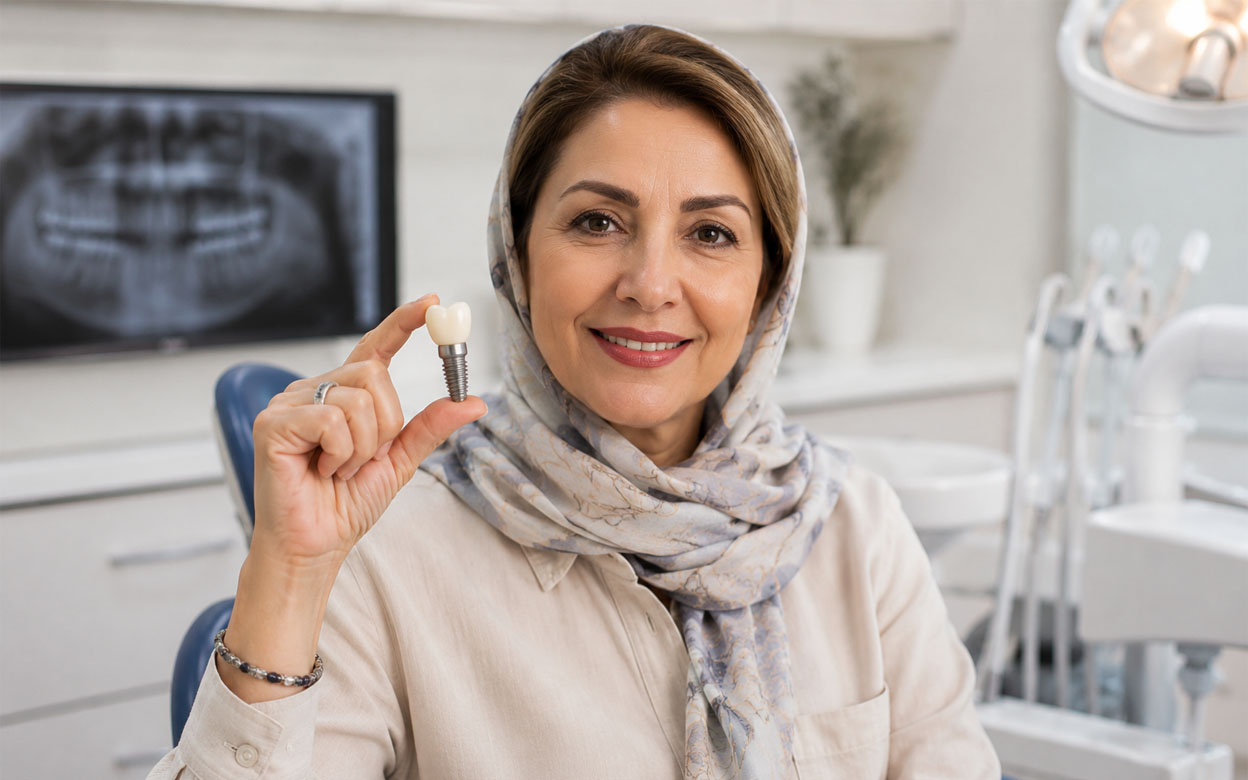
During the first few hours, the surgical site needs extra care. Vigorous rinsing or frequent spitting may disturb the surgical area and interfere with the healing process.
During the first few days, choose soft and lukewarm foods such as soup, mashed potatoes, eggs, yogurt, and other foods that require minimal chewing.
Avoid very hot, spicy, hard, or sticky foods.
Until your dentist gives you permission, avoid putting direct pressure on the implant area. Chewing on the surgical site may irritate the tissues and increase inflammation.
Some swelling after dental implant surgery is normal. Applying a cold compress during the first few hours can help reduce swelling and discomfort after a dental implant.
Apply the cold compress intermittently and avoid placing ice directly on your skin.
If your dentist has prescribed pain medication, antibiotics, or other medications, take them exactly as instructed.
Do not start or stop medications on your own without consulting your dentist.
Smoking and other tobacco products can interfere with tissue healing and increase the risk of complications around the implant.
Quitting or avoiding smoking after dental implant surgery is one of the most important steps you can take to support successful healing.
Dental implant surgery does not mean you should stop taking care of your teeth. Continue maintaining good oral hygiene according to your dentist's instructions, but be very gentle around the surgical site.
After the appropriate healing period, floss, interdental brushes, or other cleaning tools may also be recommended to help maintain the health of the tissues around the implant.
During the first few days, it is better to limit intense exercise and heavy physical activity. Getting enough rest gives your body more time and energy to recover.
Regular dental check-ups after dental implant placement are important. Your dentist can monitor the healing of the gums and the condition of the implant and take any necessary action.
Some pain, swelling, and sensitivity can be normal after implant surgery. However, you should contact your dentist promptly if you experience:
Severe or increasing pain
Significant swelling
Fever
Pus or discharge
Uncontrolled bleeding
A loose implant
Other symptoms that are getting worse instead of better
During the first few days, choose foods that do not require extensive chewing, such as:
Lukewarm soup
Yogurt
Eggs
Mashed potatoes
Soft foods
Smoothies without using a straw
Avoid extremely hot, hard, spicy, or crunchy foods during the initial healing period.
Hard and crunchy foods such as nuts and certain snacks can put pressure on the surgical site. Sticky foods may also be difficult to clean properly.
It is best to avoid very hot and irritating foods during the first few days.
Yes. Some pain and swelling after dental implant surgery can be normal and usually improves gradually during the first few days.
However, if the pain or swelling becomes increasingly severe instead of improving, or if it is accompanied by fever or discharge, you should contact your dentist.
The timing and technique depend on the location of the implant and the type of surgery performed. Oral hygiene should generally be maintained, but the surgical site should not be disturbed or subjected to excessive pressure.
Always follow your dentist's specific instructions, as every patient's treatment and healing process is different.
Proper dental implant aftercare is an essential part of the treatment process. Following an appropriate diet, maintaining oral hygiene, avoiding smoking and strenuous activity, taking prescribed medications correctly, and attending follow-up appointments can all support proper healing.
Most importantly, follow the instructions provided by your dentist because the recovery process can vary depending on the patient's condition and the type of implant surgery performed.