
- Medical License No.: 144189
- 021-8805 0794
Dr. Zahra Sadat Shamekhi
General Dentist

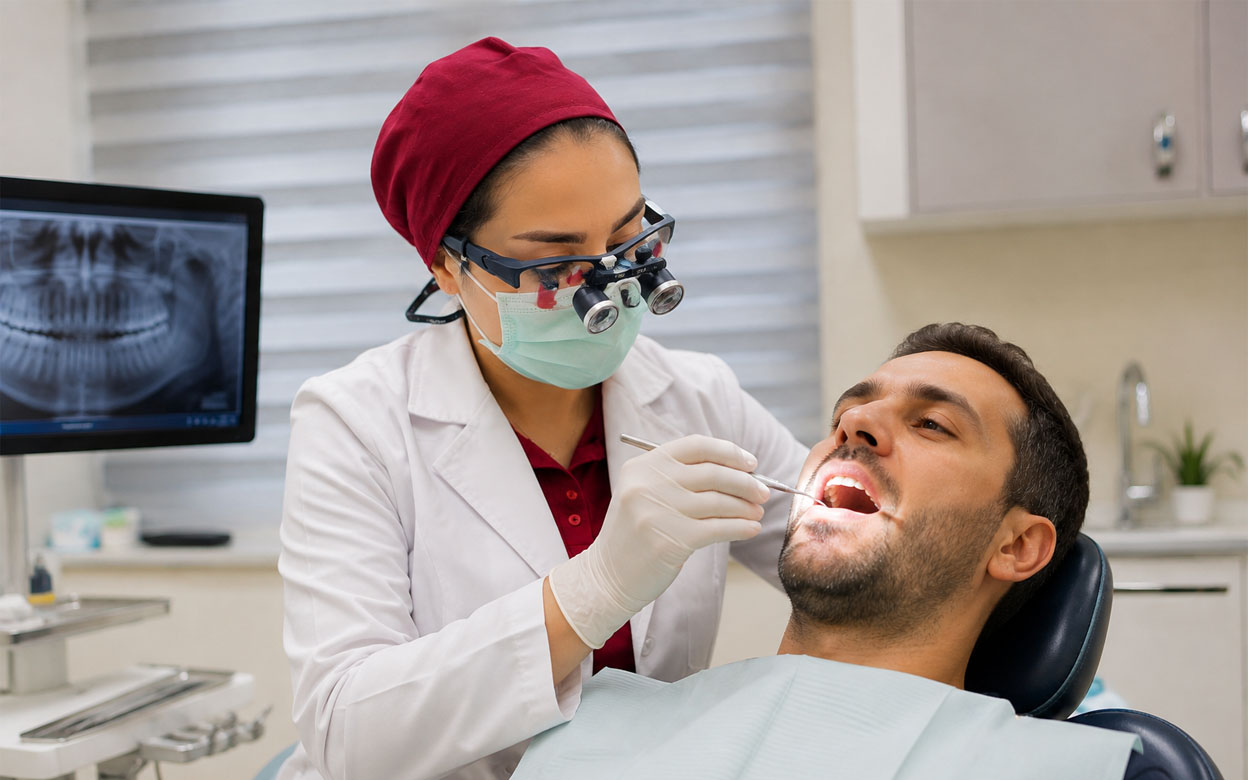
After a root canal treatment, your lips, tongue, or cheek may remain numb for a while. Eating during this time can cause you to accidentally bite your cheek or tongue or burn your mouth with hot food.
Until the final restoration or dental crown has been placed, avoid chewing very hard foods such as nuts, ice, hard candy, and other tough foods with the treated tooth.
A tooth after a root canal may be more vulnerable to pressure and fracture, particularly before its final restoration.
Smoking can negatively affect the healing of the tissues around the tooth and may compromise overall oral and gum health. It is best to limit or avoid tobacco use during the healing period.
If your dentist has prescribed medication or pain relievers, take them exactly as directed. Avoid taking antibiotics or other medications on your own without professional advice.
In many cases, a root canal-treated tooth requires a final restoration or dental crown. Delaying this step may increase the risk of the tooth cracking or breaking.
During the first few hours, soft and lukewarm foods are a good choice, such as:
Lukewarm soup
Mashed potatoes
Eggs
Yogurt
Soft rice
Soft, mild foods
Try to avoid foods that are extremely hot, hard, or sticky.
Yes. Mild pain or sensitivity after a root canal can be normal and usually decreases within a few days. This discomfort may be caused by temporary inflammation in the tissues surrounding the tooth root.
However, if the pain is severe, persistent, or gets worse instead of improving, you should contact your dentist.
Once the numbness has completely worn off, you can generally eat. However, during the first few days, it is better to choose soft foods and, whenever possible, chew on the opposite side of your mouth—especially if the final restoration has not yet been completed.
Yes. Maintaining good oral hygiene after a root canal is very important. Continue brushing your teeth as usual, but be gentle around the treated tooth.
Flossing is also generally recommended unless your dentist has given you different instructions.
Contact your dentist if you experience any of the following:
Severe or worsening pain
Swelling of the gums or face
Fever
A pimple or abscess on the gums
A broken or loose temporary filling
A feeling that the treated tooth is too high when you bite
Symptoms that persist without improvement
These symptoms may require further examination of the treated tooth.
To improve the longevity of a root canal-treated tooth, follow these recommendations:
Brush your teeth twice a day.
Floss daily.
Attend regular dental check-ups.
Avoid using your teeth to break or open hard objects.
Have the final restoration or crown placed as recommended by your dentist.
Do not delay dental care if you experience pain, swelling, or a broken restoration.
Post-root canal care is not complicated. Avoid eating until the numbness has completely worn off, avoid chewing hard foods with the treated tooth, maintain good oral hygiene, and make sure the final restoration or crown is completed on time.
Mild discomfort after a root canal treatment can be normal, but severe pain, swelling, or persistent symptoms should be evaluated by a dentist.