
- Medical License No.: 144189
- 021-8805 0794
- 09128338140
Dr. Zahra Sadat Shamekhi
General Dentist

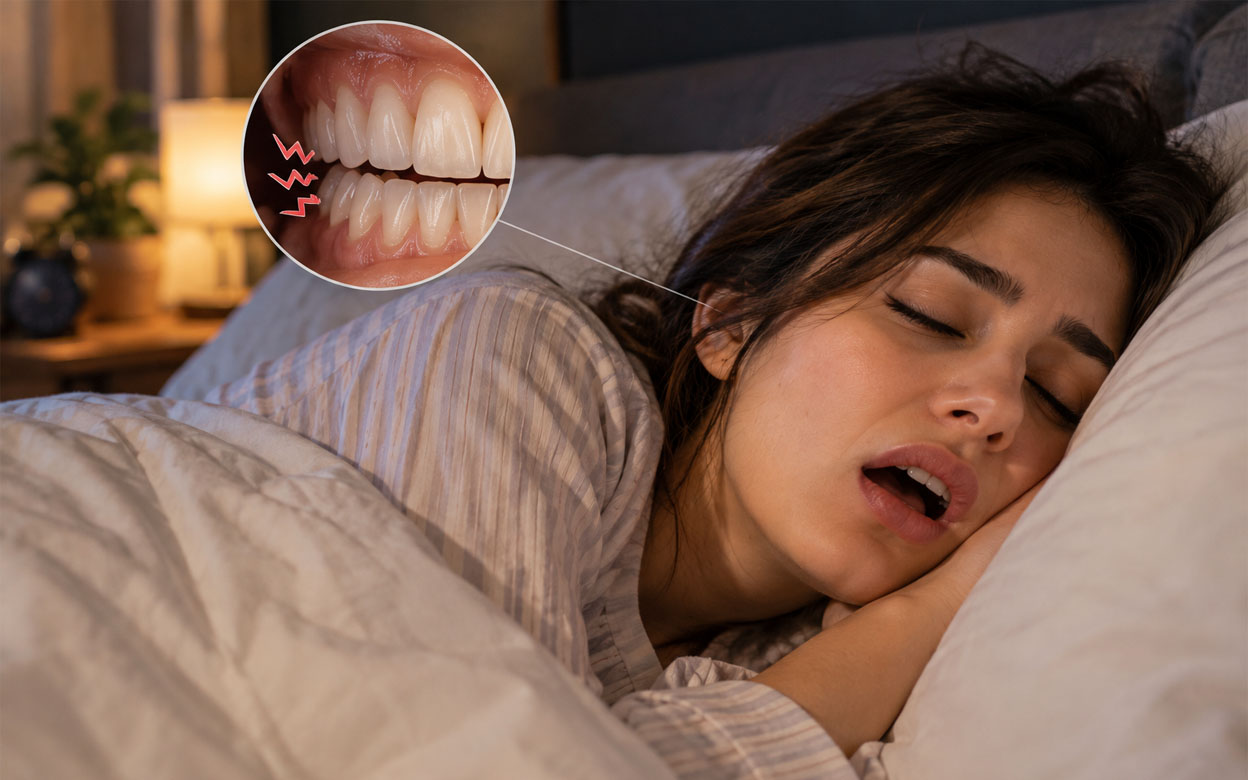
Bruxism is a repetitive activity of the jaw muscles that may involve grinding, clenching, or tightly holding the teeth together.
The exact cause of teeth grinding is not always clear. However, several factors may contribute to its development or make it worse:
Stress, anxiety, and emotional tension
Sleep disorders, including obstructive sleep apnea
Excessive caffeine consumption, especially close to bedtime
Smoking and alcohol consumption
Certain medications
Individual and underlying health factors
Teeth grinding is not always caused by stress. Identifying possible contributing factors requires evaluating each patient's circumstances.
Many people are unaware that they grind their teeth at night. They may only discover it when someone hears the grinding sounds or when their dentist notices signs of dental wear.
The most common symptoms of sleep bruxism include:
Jaw pain or muscle fatigue upon waking
Headaches, particularly around the temples
Worn-down or shortened teeth
Tooth sensitivity to hot and cold temperatures
Cracked or chipped teeth
Pain or discomfort in the jaw joint
Grinding noises during sleep
However, these symptoms alone are not enough to confirm a diagnosis of bruxism.
Yes. Severe or long-term teeth grinding can damage your teeth. Some of the most important complications include:
Repeated pressure and friction can gradually wear down the surfaces of your teeth.
As enamel becomes thinner, teeth may become more sensitive to hot and cold foods and drinks.
Teeth grinding can place excessive forces on the teeth, increasing the risk of cracks, chips, or fractures in some individuals.
People with composite bonding, porcelain veneers, or dental crowns may also experience damage to their restorations due to the excessive pressure associated with bruxism.
Continuous tension in the jaw muscles may cause fatigue, pain, and tenderness in the face.
In some individuals, teeth grinding is also associated with temporomandibular joint (TMJ) problems.
Teeth grinding treatment depends on the severity of symptoms, the extent of dental damage, and any underlying contributing factors.
One of the most common methods for protecting teeth is wearing a night guard.
A night guard is a dental appliance typically worn over the teeth during sleep. It helps reduce direct tooth-to-tooth contact and protect against damage caused by grinding and clenching.
It is important to understand that a night guard does not necessarily stop teeth grinding. Its primary purpose is to protect the teeth.
If stress contributes to bruxism, relaxation exercises, regular physical activity, and improving sleep quality may help manage symptoms.
Reducing excessive caffeine intake, especially later in the day, and avoiding tobacco may help manage certain factors associated with teeth grinding.
If teeth grinding occurs alongside loud snoring, breathing interruptions during sleep, or excessive daytime sleepiness, an evaluation for possible sleep disorders may be necessary.
If bruxism has caused significant tooth wear, cracks, or fractures, restorative treatments such as composite fillings or dental crowns may be needed.
Currently, there is no single treatment that can be considered a permanent cure for bruxism in every patient.
In many cases, treatment focuses on protecting the teeth, reducing symptoms, and managing contributing factors.
The most appropriate approach should be determined after a dental examination and an evaluation of the patient's condition.
Severe and repeated pressure may place additional stress on the tissues supporting the teeth. However, loose teeth can also result from other conditions, such as gum disease, and should be evaluated by a dentist.
Stress and anxiety are associated with bruxism, particularly awake bruxism. However, they are not the only possible causes.
A night guard primarily protects the teeth from excessive pressure and wear. It does not necessarily stop jaw muscle activity or eliminate teeth grinding.
Yes. Repeated forces caused by bruxism can increase the risk of chipping or breaking composite dental restorations.
Teeth grinding (bruxism) is a condition that may occur without a person being aware of it, particularly during sleep.
When severe or persistent, it can lead to tooth wear, sensitivity, damaged dental restorations, and jaw pain.
Early diagnosis, the use of a protective night guard when appropriate, and evaluation of contributing factors can help reduce the risk of dental damage.
If you experience jaw pain when waking up, notice signs of tooth wear, or are concerned about damage caused by teeth grinding during sleep, you can visit Dr. Zahra Sadat Shamekhi's dental office in the Mollasadra and Vanak area of Tehran for a dental examination.
After evaluating your teeth, jaw muscles, and symptoms, appropriate options for protecting your teeth and treating any existing dental damage can be discussed.