
- Medical License No.: 144189
- 021-8805 0794
Dr. Zahra Sadat Shamekhi
General Dentist

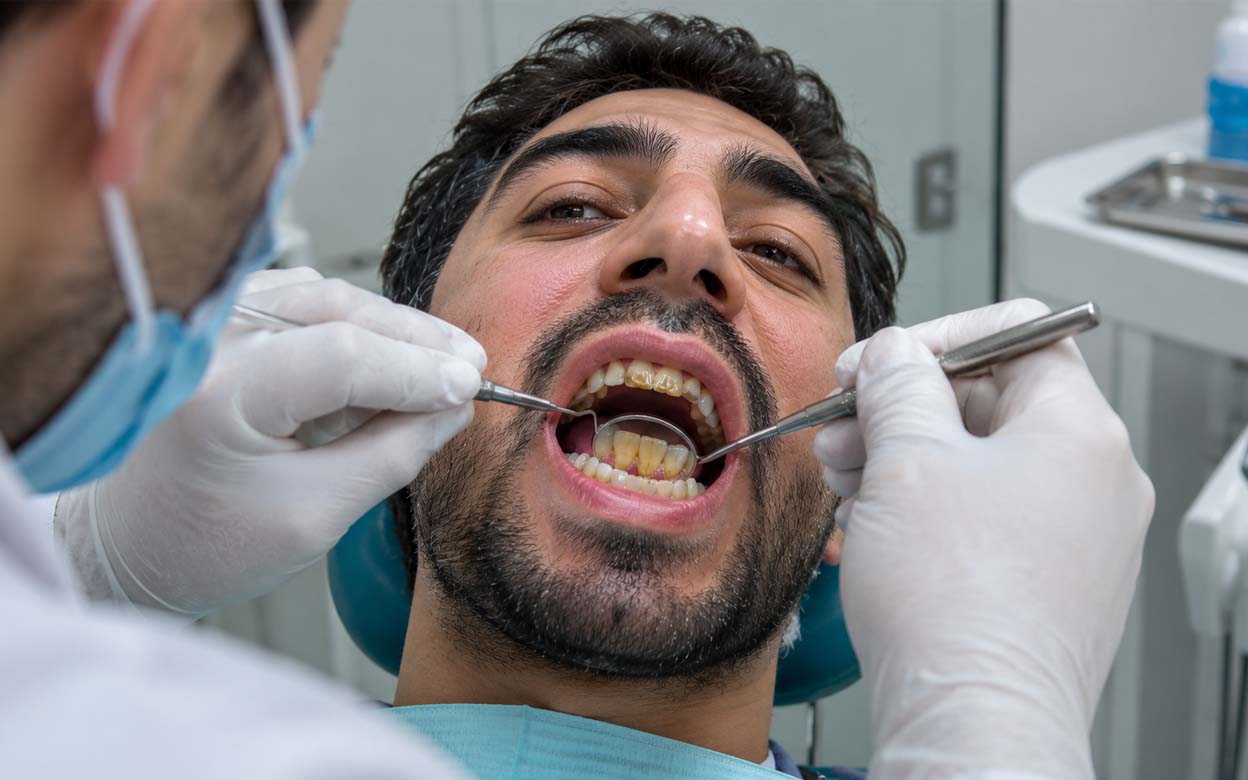
Dental tartar is a hardened layer of plaque that sticks firmly to the teeth and cannot be removed with regular brushing or flossing.
Plaque is a soft, sticky film containing bacteria that forms naturally on teeth throughout the day. When plaque remains on the teeth for a long time, minerals from saliva cause it to harden and turn into tartar.
Unlike plaque, dental tartar can only be removed by a dentist or dental hygienist through professional cleaning.
Several factors can increase the risk of tartar formation, including:
Not brushing and flossing regularly allows plaque to accumulate on teeth, increasing the chance of tartar formation.
Even people who brush daily may develop tartar if they do not clean all tooth surfaces correctly, especially near the gum line.
Sugar provides food for harmful bacteria in the mouth, leading to more plaque buildup and increasing the risk of tartar.
Smoking can accelerate tartar formation and also increase the risk of gum disease and tooth discoloration.
Without professional dental examinations and cleanings, tartar can build up unnoticed and cause oral health problems.
Common symptoms of tartar buildup include:
Yellow or brown stains on teeth
Rough texture on the tooth surface
Bad breath
Bleeding gums while brushing
Gum redness and swelling
Tooth sensitivity
Gum recession in advanced cases
If tartar is left untreated, it can contribute to serious gum problems and damage the tissues supporting the teeth.
Yes. Although tartar itself does not directly cause cavities, it creates a rough surface where bacteria can easily grow.
Untreated tartar may lead to:
Gum inflammation (gingivitis)
Periodontitis (advanced gum disease)
Gum bleeding
Bad breath
Tooth loosening
Tooth loss in severe cases
For this reason, removing tartar at the right time is important for maintaining healthy teeth and gums.
Dental tartar cannot be removed with a normal toothbrush. Professional teeth scaling (dental cleaning) is the most effective method.
During scaling, the dentist uses special instruments or ultrasonic devices to remove hardened deposits from the teeth and gum line.
The procedure is usually quick and does not cause significant discomfort for most patients.
To reduce the risk of tartar formation, follow these simple steps:
Use a soft toothbrush and fluoride toothpaste to remove plaque effectively.
Flossing helps clean areas between teeth that a toothbrush cannot reach.
Reducing sugar intake helps prevent bacterial growth and plaque formation.
Water helps wash away food particles and supports saliva production.
A dental checkup every 6 months helps detect problems early and prevents tartar buildup.
One of the most common questions is whether professional teeth cleaning harms teeth.
The answer is no. Dental scaling does not damage healthy teeth. In fact, removing tartar helps protect teeth and gums from future problems.
Some patients may experience temporary sensitivity after cleaning, which usually disappears within a few days.
Dental tartar is a hardened form of plaque that develops when oral hygiene is not maintained properly. It can cause gum disease, bad breath, and other dental problems if ignored.
Regular brushing, flossing, a healthy diet, and professional dental cleanings are the best ways to prevent tartar buildup and maintain long-term oral health.