
- Medical License No.: 144189
- 021-8805 0794
Dr. Zahra Sadat Shamekhi
General Dentist

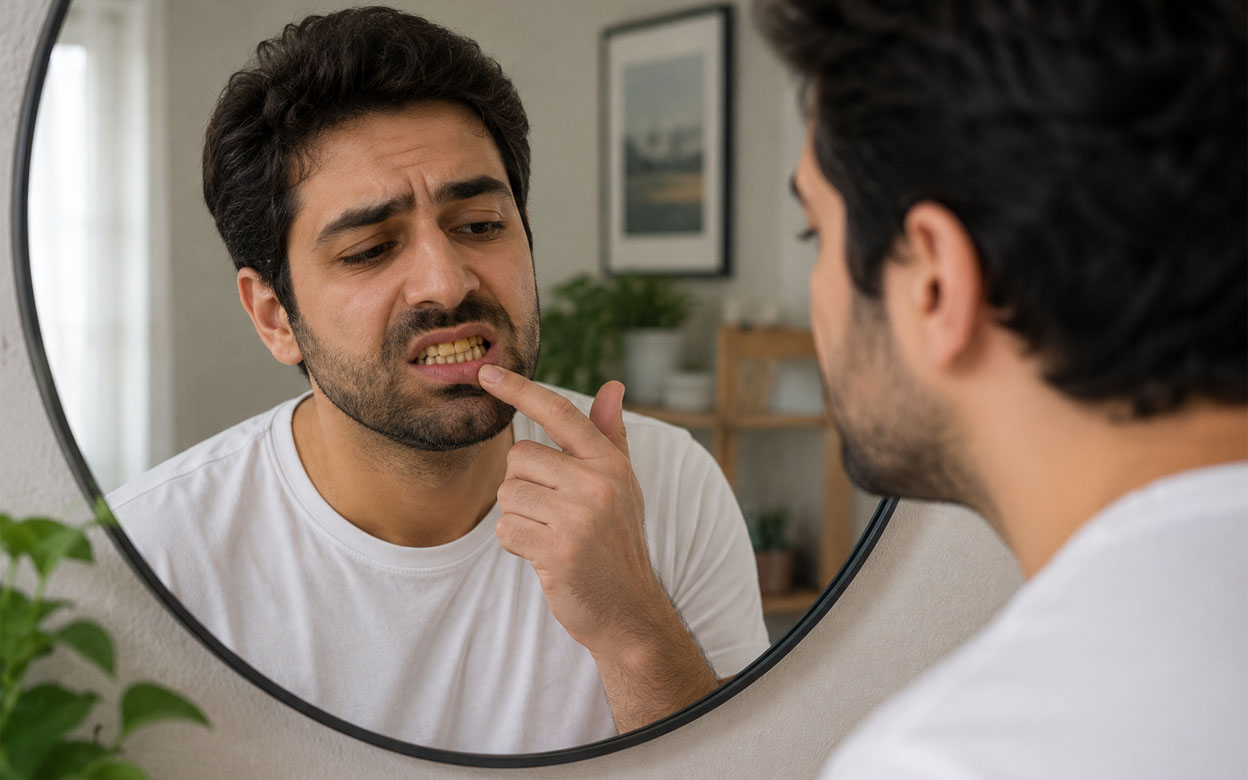
Bad breath, medically known as halitosis, refers to an unpleasant odor coming from the mouth.
Many cases of bad breath originate in the mouth. Bacteria can accumulate on the tongue, teeth, and gums and produce unpleasant-smelling compounds. Therefore, maintaining good oral and dental hygiene is one of the most important steps in controlling bad breath.
When dental plaque is not removed regularly, bacteria can multiply and contribute to an unpleasant odor.
The surface of the tongue, especially the back of the tongue, can collect bacteria and food particles. Gently cleaning your tongue can help reduce bad breath.
Deep cavities and trapped food particles inside decayed teeth can contribute to bad breath.
Gingivitis and periodontal disease are important causes of persistent bad breath. Bacteria around the gums and in deep periodontal pockets can produce unpleasant odors.
Saliva helps wash away food particles and bacteria from the mouth. When saliva production decreases, the risk of bad breath increases.
Dry mouth can become more noticeable during sleep, which is why many people experience morning bad breath. Certain medications can also cause dry mouth.
Smoking can directly cause an unpleasant mouth odor and may also increase the risk of gum disease, making bad breath more persistent.
Garlic, onions, and some spices can temporarily cause bad breath. Some food compounds can also enter the bloodstream after digestion and affect the smell of your breath.
Certain oral infections, sinus problems, postnasal drip, and tonsil stones may also be associated with bad breath.
Treatment depends on the underlying cause. However, several simple habits can help reduce bad breath:
Brush your teeth twice a day with fluoride toothpaste.
Clean between your teeth every day with dental floss or an appropriate interdental cleaner.
Gently clean your tongue.
Drink enough water to prevent dry mouth.
Avoid smoking and tobacco products.
Limit excessive consumption of sugary foods and drinks.
Replace your toothbrush every 3–4 months or sooner if the bristles become worn.
Visit your dentist regularly to check the health of your teeth and gums.
Some therapeutic mouthwashes can help control plaque, gum inflammation, and bad breath. However, mouthwash is not a substitute for brushing and flossing.
Cosmetic mouthwashes may temporarily mask unpleasant odors, but if the underlying cause is tooth decay, gum disease, or bacterial buildup, the actual problem needs to be treated.
Sometimes, yes. Tooth decay, dental infections, and gum disease can cause unpleasant mouth odor. However, bad breath does not necessarily mean that you have a cavity.
If you also experience toothache, bleeding gums, swelling, tooth sensitivity, or visible cavities, it is best to have your teeth examined by a dentist.
Brushing alone is not always enough. Bad breath may persist because of:
An unclean tongue
Plaque between the teeth
Gum disease
Tooth decay
Dry mouth
Smoking or tobacco use
Certain oral or throat conditions
Therefore, if bad breath continues despite good oral hygiene, identifying the underlying cause is important.
If bad breath continues despite proper oral hygiene, you should consider seeing a dentist for an examination.
Professional evaluation is especially important if you have:
Bleeding or swollen gums
Toothache
Tooth decay
Loose teeth
Severe dry mouth
Persistent or unexplained bad breath
A dentist can examine your teeth, gums, and mouth and determine the possible cause. If the problem appears to originate outside the mouth, you may be advised to see a physician.
The causes of bad breath are often related to oral health problems such as plaque buildup, bacteria on the tongue, tooth decay, gum disease, or dry mouth.
Brushing twice a day, cleaning the tongue, flossing daily, drinking enough water, and maintaining regular dental checkups can help prevent and reduce bad breath.
If bad breath persists despite proper oral care, it is better to identify and treat the underlying cause rather than simply masking the odor.